
Preparing for Medicaid Eligibility 2026: A Family’s Guide to Changes and Planning
The way New York Community Medicaid looks back at your finances is changing in 2026, and that 30 month look back period could catch families off guard. You might be surprised how small moves can trigger a Medicaid penalty, even if you think you’re playing it safe. Knowing what to watch for and planning ahead can save your family from costly delays. This guide breaks down the key Medicaid changes 2026 brings and what you need to do now to protect your eligibility.

Understanding Medicaid Eligibility 2026
New York’s Medicaid system is about to change in ways that will impact thousands of families. The clock is ticking, and knowing what’s coming helps you prepare smart moves now instead of costly mistakes later.
New York Community Medicaid Overview
New York Community Medicaid helps pay for care when you live at home rather than in a nursing facility. This program covers home health aides, adult day care, and medical equipment that keeps you independent.
Many New Yorkers don’t realize Community Medicaid exists as an option. You might picture Medicaid as only for nursing homes, but that’s just one part of the program.
The basics stay simple: you must meet both financial and medical needs tests. For 2023, a single person can have no more than $28,133 in assets (excluding your home up to certain limits) and monthly income under $1,677.
What makes New York Community Medicaid different from other states? Until now, New York stood out because it had no “look back” period for home care services – but that’s about to change.
Key Medicaid Changes 2026
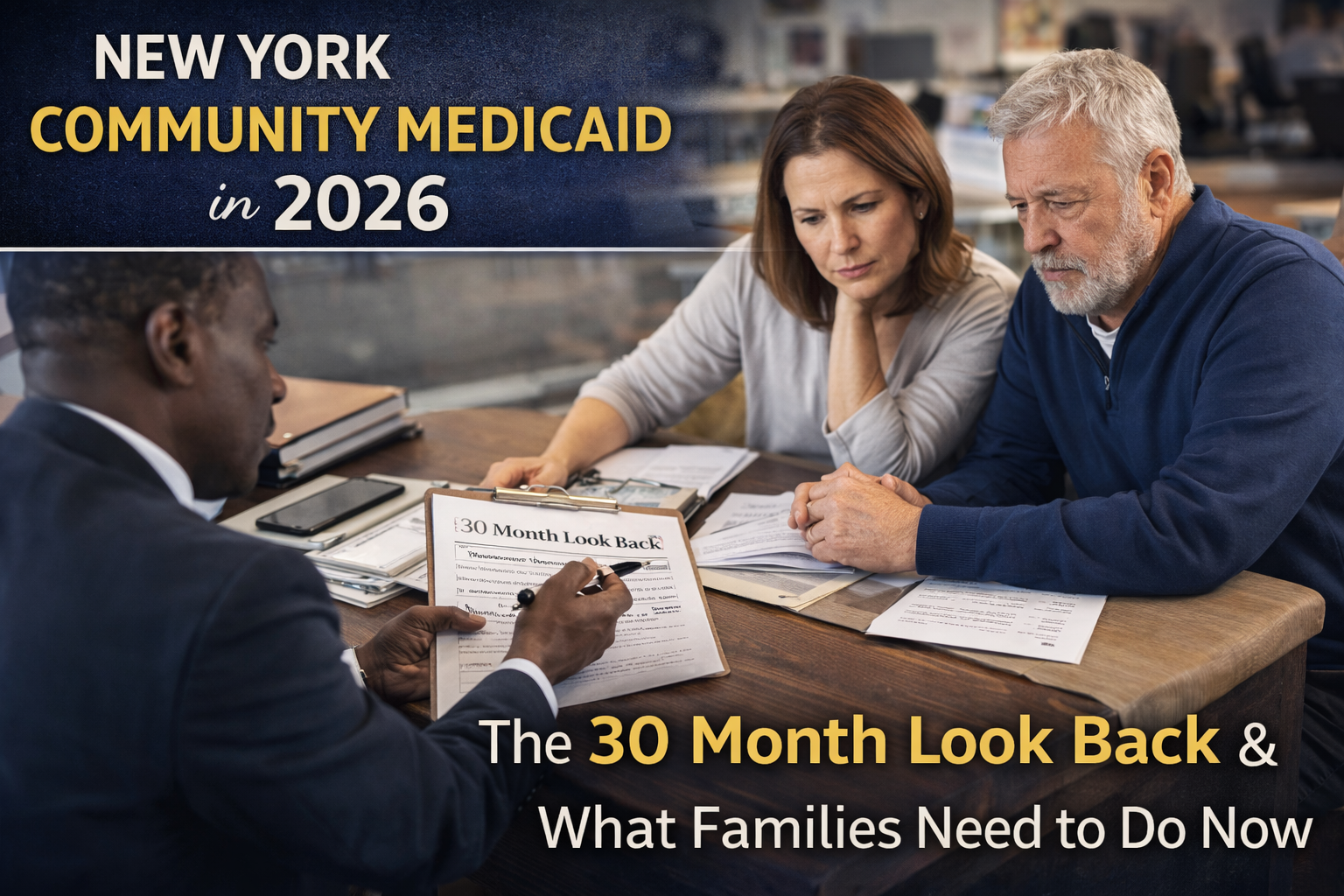
The biggest change hitting in 2026 is the new 30-month look back period for Community Medicaid. This marks a complete shift from current rules where you can apply for home care without scrutiny of past financial moves.
Starting in 2026, New York will check all financial gifts, transfers, and sales you made during the past 30 months. Any assets given away or sold below market value could trigger penalties.
The penalty works by delaying when you can start receiving benefits. For example, if you gave away $15,000 to your child, you might face a 2-3 month wait period before Medicaid kicks in.
This change brings Community Medicaid closer to nursing home Medicaid rules, which already use a 60-month look back. The goal? Stopping last-minute asset transfers just to qualify for benefits.
Why does this matter to you right now? Because transfers made as early as mid-2023 might fall within that 30-month window when the rule takes effect.
30 Month Look Back Explained
The 30-month look back works like this: when you apply for Community Medicaid in 2026, officials will examine every financial transaction from the previous two and a half years.
They’ll ask pointed questions: “Did you give money to your children?” “Did you sell your car to a relative for less than it’s worth?” “Did you transfer property or add someone to a deed?”
The state doesn’t ban giving gifts – it simply imposes waiting periods based on what you gave away. They take the total value of improper transfers and divide by the monthly cost of care in your area.
For example: You gave away $60,000 within the look-back period. If care costs $6,000 monthly in your region, you’d face a 10-month penalty period where you must pay privately before Medicaid helps.
What trips up most families? Not knowing which transfers are allowed. You can still pay for certain expenses without penalties – like home repairs, medical bills not covered by insurance, and even some family caregiver arrangements with proper documentation.
The key insight: start tracking everything now. Keep receipts, bank statements, and written explanations for major expenses or gifts starting today.
Planning for Medicaid Success
Getting ahead of these changes means understanding exactly what triggers penalties and taking strategic steps now. Small actions today can prevent big headaches when you apply in 2026.
Identifying Medicaid Penalty Triggers
Certain financial moves almost always trigger Medicaid penalties. Knowing these red flags helps you avoid costly mistakes.
Cash gifts to family members top the list. That $15,000 annual tax-free gift you can make to each child? Medicaid doesn’t recognize that tax exemption. Every dollar counts as a transfer that could delay your benefits.
Selling assets below fair market value also raises alarms. When you sell your car to your grandson for $5,000 when it’s worth $15,000, Medicaid counts that $10,000 difference as a gift.
Adding someone to your bank account or home deed often counts as a partial gift. If you add your daughter to your $200,000 home’s deed, Medicaid might count that as a $100,000 gift.
Did you know paying for a grandchild’s college can trigger penalties? Many families are shocked to learn that these payments count as gifts unless structured correctly.
Not all transfers cause problems. You can still spend money on yourself, pay fair market value for services, and make certain transfers to specific protected individuals like disabled children or caretaker children who’ve lived with you for years.
The bottom line: before making any large financial move, ask yourself, “How would this look to Medicaid in 2026?”
Proactive Medicaid Planning Tips
Smart planning starts with getting your numbers clear. First, make a complete list of your assets and income sources. Know exactly what you own and what counts toward Medicaid limits.
Next, create a spending plan for necessary items. Home repairs, prepaying funeral expenses, replacing an old car, or paying off debt are all legitimate ways to spend down assets without triggering penalties.
Consider setting up a Pooled Income Trust if your income exceeds Medicaid limits. This special trust lets you set aside excess income for approved expenses while maintaining eligibility.
For married couples, work with the “community spouse” protection rules. These rules allow the non-applicant spouse to keep more assets and income, but you need to structure things properly.
One practical tip: if you need home improvements or medical equipment not covered by insurance, make those purchases now. Document everything with receipts and medical necessity letters when applicable.
Remember: timing matters more than ever. With the 30-month look back coming, actions taken in 2023-2024 will fall under scrutiny when the new rules take effect.
Family Planning for Medicaid Eligibility
Bringing your family into the planning process early prevents misunderstandings and conflicts later. Start with an honest family meeting about potential care needs and financial realities.
Explain to adult children that sudden gifts or transfers could hurt your Medicaid eligibility. Well-meaning children often don’t realize their parent’s gift could result in months without coverage.
For families considering caregiver arrangements, put everything in writing. A proper caregiver agreement, drafted by an attorney, can allow you to pay family members for care without triggering penalties.
Think twice before lending money to family members. Unpaid loans count as gifts under Medicaid rules. If you do lend money, create proper loan documents with reasonable interest rates and repayment schedules.
What about family businesses? Transfers of business interests require special care. In some cases, business assets may be exempt, but only with proper planning and documentation.
The most important family planning step? Designate someone trustworthy to manage your affairs through a proper power of attorney. This document needs specific Medicaid planning provisions to be effective.
Legal Guidance and Support
With complex rules and high stakes, getting professional help makes sense. Legal experts can spot problems you might miss and create plans that protect both your assets and your care options.

Estate Planning for Peace of Mind
Estate planning goes beyond just having a will. For Medicaid purposes, you need tools that work while you’re still alive but might need care.
Start with a comprehensive power of attorney that includes “gifting provisions.” Standard forms from office supply stores often lack the specific language needed for Medicaid planning.
The New York Statutory Power of Attorney was updated in 2021 with significant changes. Make sure yours is current and contains all needed provisions.
Consider whether trusts might help your situation. Some irrevocable trusts, when set up well before the look back period, can protect assets while allowing you to keep some control or income.
A health care proxy lets you name someone to make medical decisions if you cannot. This works alongside your health care proxy, which focuses on medical rather than financial decisions.
Don’t forget to review how your assets are titled. Joint ownership, rights of survivorship, and beneficiary designations all affect how assets transfer and whether they’re counted for Medicaid.
The best estate plans get reviewed regularly. Set a calendar reminder to check your documents every 1-2 years or whenever major life events or law changes occur.
Expert Advice on Elder Law
Elder law attorneys specialize in the complex rules around aging, care, and benefits. Unlike general practice lawyers, they focus on how various systems work together.
When choosing an elder law attorney, look for someone with specific Medicaid planning experience. Ask how many Medicaid applications they handle yearly and their success rate with complex cases.
Good elder law attorneys work as part of a team. They often partner with financial advisors, care managers, and healthcare professionals to create comprehensive plans.
Be wary of one-size-fits-all solutions. Each family’s situation has unique elements that require personalized planning. What worked for your neighbor might not work for you.
The cost of expert advice often pays for itself many times over. A single Medicaid planning mistake can cost tens of thousands in out-of-pocket care expenses or lost benefits.
Many elder law attorneys offer educational workshops or free initial consultations. These give you a chance to learn basics and assess whether the attorney is a good fit for your needs.
Secure Your Future with Professional Help
The stakes are high when planning for long-term care. With nursing homes costing $12,000-$15,000 monthly in New York and home care running $5,000-$9,000 monthly, proper planning protects your life savings.
Start by gathering key documents before meeting with professionals: recent bank statements, property deeds, insurance policies, and existing legal documents. This helps advisors give accurate advice from the first meeting.
Ask potential advisors about their approach to tax planning alongside Medicaid. Good strategies address both concerns, since tax-smart moves sometimes conflict with Medicaid planning.
Be honest with your advisors about family dynamics and concerns. If you worry about a child’s spending habits or marriage stability, professionals can suggest protective structures.
Remember that plans need maintenance. Set up regular review meetings with your advisors to check that your plan still works with changing laws and life circumstances.
The peace of mind from proper planning is priceless. Knowing you’ve protected your assets and access to care lets you focus on living your life rather than worrying about the future.
Taking action now, well before the 2026 changes take effect, gives you the most options and greatest protection. The families who plan early will navigate these changes with minimal disruption to their finances and care.